 BarevTrip


Tsaghkadzor, Lake Sevan & Dilijan
9 h · 270 km · hotel to hotel · North: Sevan, Tavush, Lori, Shirak| Sedanup to 3 with 3 suitcases or 4 with 2 | 49,000 AMD |
|---|---|
| Minivanup to 7 | 69,000 AMD |
Tour request
Step 1 of 2Included, not included, extrasEntrance tickets are separate
- Car with driver for the whole route, hotel to hotel
- Stops as per programme, waiting at each
- Free child seat
Free cancellation and one free reschedule up to 24 hours before pickup, Yerevan time. No deposit: nothing to pay before confirmation.
Contacts next; payment only after confirmation
Stops in order
9 h total- Hotel in YerevanPick-up at your address at the chosen time09:00
- Photo: Alina.Parazyan, CC BY-SA 4.0 (Wikimedia Commons)
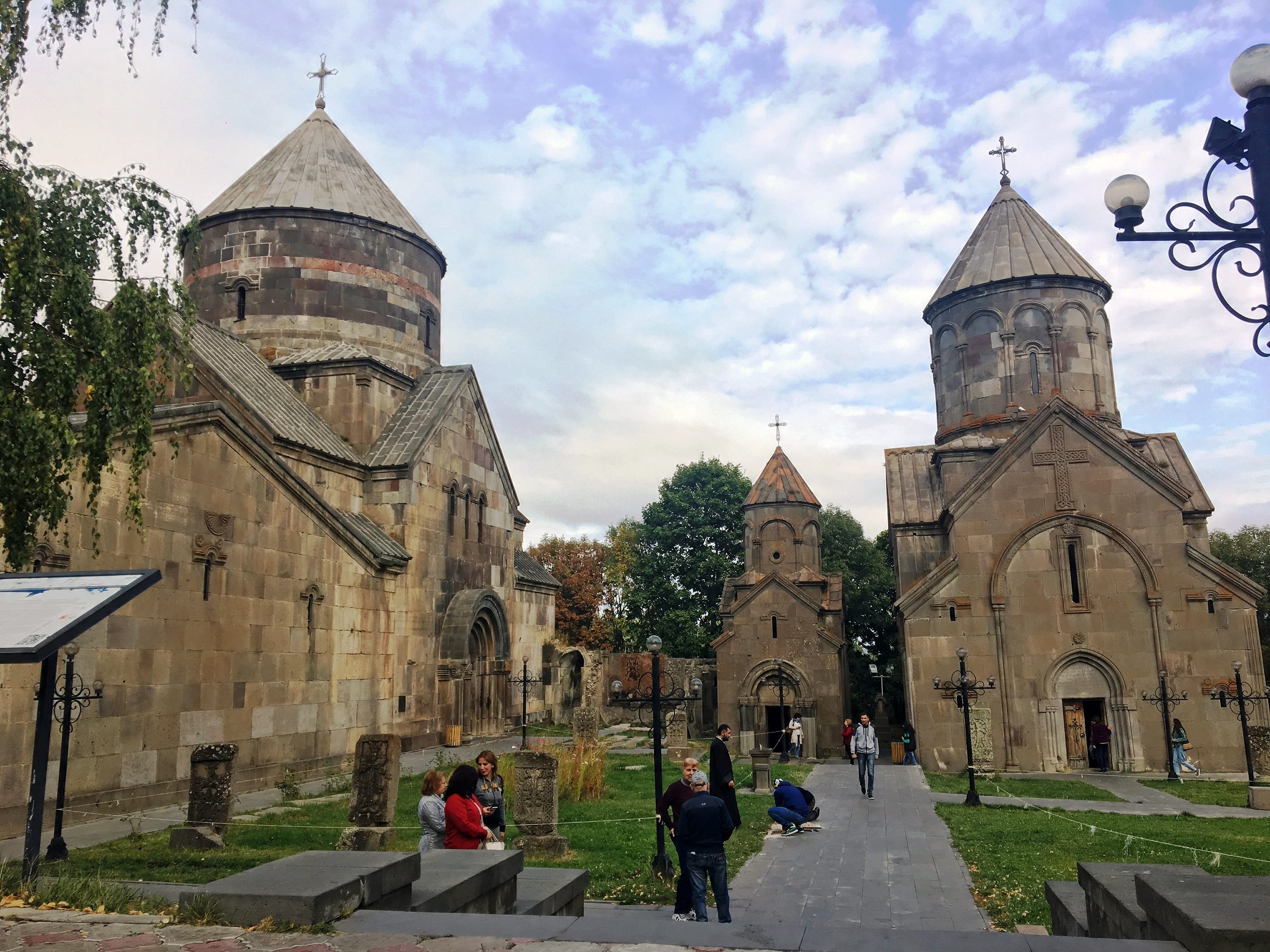
Kecharis is a working monastery of the 11th to 13th centuries on the north-western edge of Tsaghkadzor. Three churches stand close together on one site, with a gavit, or narthex, adjoining the main one, and around them lies a cemetery with khachkars from the 11th to 17th centuries. The main church of Saint Gregory dates from the early 11th century, and Katoghike was built in 1203–1214. Some 120 metres to the west stands the small church of Surb Harutyun from 1220 with its own gavit.
Free entry
The Tsaghkadzor Ropeway has been running since 1967. It is a chairlift on the eastern slope of Mount Teghenis: open chairs pass over forest and mountain meadows, and three lifts in a row climb from the lower station at about 1,970 metres to the upper one at 2,819 metres. From the top you look down on the Tsaghkadzor valley and, on a clear day, see Mount Ararat. In winter it serves a ski resort; in the warmer months people ride it for the view.
Ticket: pay separately on site
Sevanavank is an active monastery on a peninsula off the northwestern shore of Lake Sevan. Two small 9th-century churches of dark basalt stand on the hilltop, their drums topped with conical roofs; their construction is linked to Princess Mariam of the Bagratuni family. Until the 1950s this was an island: the peninsula appeared when the lake level was artificially lowered. A long staircase leads from the car park up to the churches, and the top offers a wide view of the lake and mountains.
Free entry
Old Dilijan occupies the short pedestrian Sharambeyan Street in the town centre. Two-storey houses with stone ground floors, carved wooden balconies and outdoor staircases follow the 19th-century architecture of Dilijan. The ensemble is a restoration: a reserve-museum of folk architecture opened here in 1983 on the initiative of the artist Hovhannes Sharambeyan, and the quarter was rebuilt in the 2000s. Today the street has craft workshops and shops, cafés, a hotel and viewpoints over the town and the mountains.
Haghartsin is a working monastery of the 10th to 13th centuries on a wooded promontory near Dilijan. Its small site holds three churches, a chapel, narthexes and a refectory from 1248, a long hall whose vaults rest on intersecting arches. The main church, Astvatsatsin, rises to a tall faceted drum, and its east wall bears a carving of two figures with staffs on either side of a church model. A forest trail to the Hidden Waterfall starts at the monastery.
Free entry
- Hotel in YerevanReturn to the same or another address in the city≈ 18:00


Driving between stops takes about 4.5 h. You can change the order by telling the driver.
What’s included, what’s not
- Included
- Car with a driver for the whole route, hotel to hotel
- Stops as planned and waiting at each one
- Free child seat
- Fuel, parking, water
- Not included
- Entrance tickets: paid on the spot
- Lunch: per the café menu
- Qualified guide: optional, + 40,000 AMD
- Tips at your discretion
One surcharge: an unplanned stop or a change of route.
 5.0
 5.0

