 BarevTrip


Khor Virap, Areni & Noravank
8 h · 260 km · hotel to hotel · South: Ararat, Vayots Dzor, Syunik| Sedanup to 3 with 3 suitcases or 4 with 2 | 45,000 AMD |
|---|---|
| Minivanup to 7 | 65,000 AMD |
Tour request
Step 1 of 2Included, not included, extrasEntrance tickets are separate
- Car with driver for the whole route, hotel to hotel
- Stops as per programme, waiting at each
- Free child seat
Free cancellation and one free reschedule up to 24 hours before pickup, Yerevan time. No deposit: nothing to pay before confirmation.
Contacts next; payment only after confirmation
Stops in order
8 h · estimate for a 08:00 pickup- Hotel in YerevanPick-up at your address at the chosen time08:00
≈ 40 min by car · 42 km
- © BarevTrip
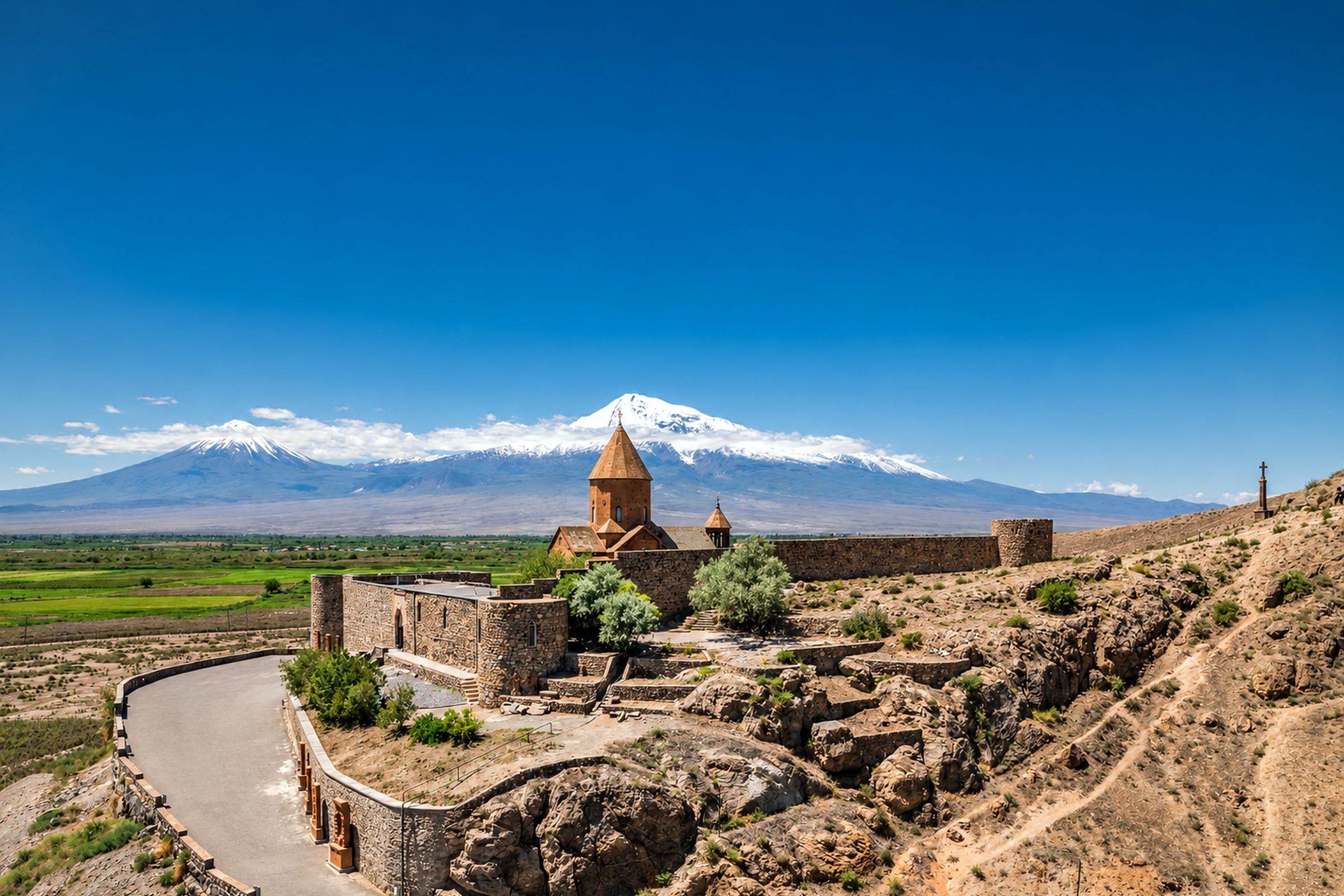
Khor Virap is a working monastery on a rocky hill in the Ararat Valley, close to the Turkish border, with Mount Ararat rising directly opposite. According to church tradition, Gregory the Illuminator was held here in an underground dungeon for thirteen years. Most of today's buildings date from the 17th century: a wall with round towers, the Church of the Holy Mother of God and a chapel where a narrow iron ladder leads down into a pit about six metres deep. The surrounding hills hold the ruins of Artashat, an ancient Armenian capital.
Free entry
≈ 65 min by car · 74 km
Areni is a wine-making village in Vayots Dzor, in the valley of the Arpa River. On a hill by the river stands the Church of Surb Astvatsatsin, built in 1321. Its builder, the master Momik, also carved the Virgin and Child above the west portal and the symbols of the Evangelists on the pendentives of the dome. Around the church is a cemetery with khachkars, the oldest from the 8th century, and carved tombstones. Wineries and shops along the highway sell wine from the local Areni grape, and in early October the village holds a wine festival.
≈ 5 min by car · 2 km
Areni-1 Cave lies in a limestone cliff above the Arpa River, on the edge of the wine village of Areni. Archaeologists found a grape press and wine vats from around 4000 BC here, one of the oldest known wineries, and a leather shoe about 5,500 years old, the oldest known. From the walkways you can see excavation pits with jars sunk into the floor, and birds' nests cling to the vault near the entrance. The shoe itself is kept at the History Museum of Armenia in Yerevan.
Ticket: pay separately on site
≈ 10 min by car · 8 km
Noravank is a 12th–14th century monastery in the narrow gorge of the Gnishik River, beneath sheer red cliffs. In the 13th and 14th centuries it was the seat of the metropolitans of Syunik and the burial place of the Orbelian princes. Its best-known building is the two-storey Surb Astvatsatsin church of 1339, with narrow steps running straight up the facade to the upper chapel. Next to it stands the 13th-century main church, whose narthex keeps carved tympana and tombstones.
Free entry
≈ 110 min by car · 117 km
- Hotel in YerevanReturn to the same or another address in the city≈ 16:00


Driving times assume no traffic and are based on OpenStreetMap as of November 11, 2026; the schedule includes another 45 min for parking, walking and breaks en route.
What’s included, what’s not
- Included
- Car with a driver for the whole route, hotel to hotel
- Stops as planned and waiting at each one
- Free child seat
- Fuel, parking, water
- Not included
- Entrance tickets: paid on the spot
- Lunch: per the café menu
- Qualified guide: optional, + 40,000 AMD
- Tips at your discretion
One surcharge: an unplanned stop or a change of route.
Driver and meeting
Good to know
Questions and answers
All tourist questionsHow much does the trip cost and what’s included?Sedan 45,000 AMD, minivan 65,000 AMD per car; tickets separately.
Can we take a guide?Yes, tick the option in your request, + 40,000 AMD per trip.
Where and when do we leave?From your hotel in Yerevan; you choose the pick-up time in the form.
Can we change the order of stops or stay longer?Order: tell the driver at the start; a route change on the way goes through the dispatcher.
How much are the tickets and how do we pay for them?Tickets are bought on the spot, in cash.
We’re travelling with children. Are there seats?Yes, free; mandatory for children under 7.
There are six of us. Which car?A minivan, 65,000 AMD per car.
Can I cancel or reschedule?Free cancellation and one free reschedule until 24 hours before pickup.
Detailed answers about this route
All tourist questionsArticles about places on this route
Reviews of trips with BarevTrip
 5.0
 5.0
How similar trips differ
All tours
