 BarevTrip


Echmiadzin, Sardarapat & Zvartnots
8 h · 130 km · hotel to hotel · Around Yerevan| Sedanup to 3 with 3 suitcases or 4 with 2 | 38,000 AMD |
|---|---|
| Minivanup to 7 | 53,000 AMD |
Tour request
Step 1 of 2Included, not included, extrasEntrance tickets are separate
- Car with driver for the whole route, hotel to hotel
- Stops as per programme, waiting at each
- Free child seat
Free cancellation and one free reschedule up to 24 hours before pickup, Yerevan time. No deposit: nothing to pay before confirmation.
Contacts next; payment only after confirmation
Stops in order
8 h total- Hotel in YerevanPick-up at your address at the chosen time09:00
- © BarevTrip
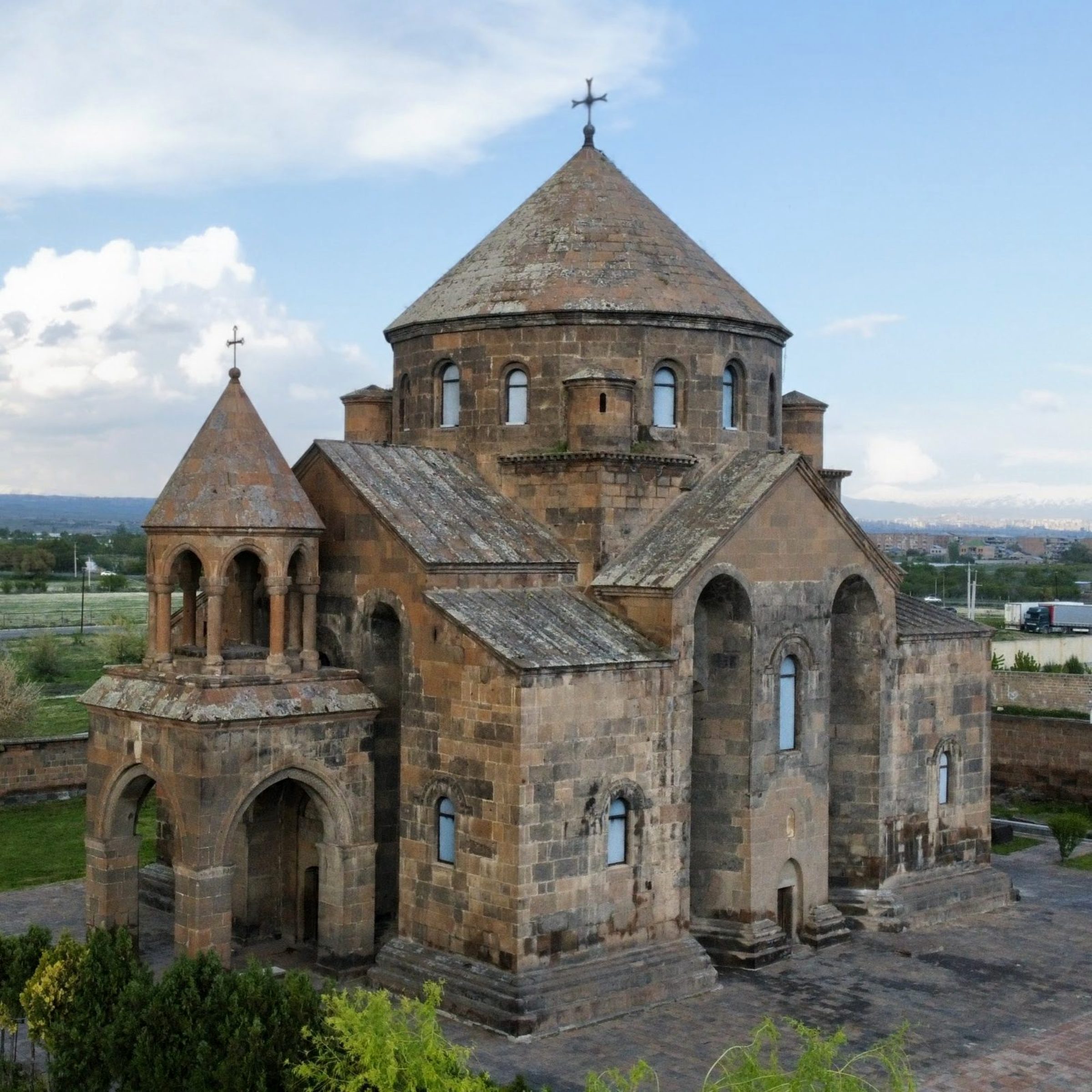
Saint Hripsime Church stands on the eastern edge of Vagharshapat (Etchmiadzin), by the road from Yerevan. Catholicos Komitas built it in 618 on the spot where, according to tradition, the virgin Hripsime was buried, a martyr from the time of Armenia's conversion to Christianity. Outside, the church is a severe stone mass cut by deep niches; inside, four apses meet beneath a tall dome. A porch with a bell tower was later added at the west entrance, and a crypt with the saint's tomb lies beneath the altar. The church is part of a UNESCO World Heritage Site.
Free entry
Saint Gayane Church stands on the southern side of Vagharshapat, about 500 metres from Etchmiadzin Cathedral, where tradition says the abbess Gayane was martyred. The present building of dressed tuff dates from 630: a domed basilica on four piers, one of the early examples of this type in Armenia. A three-arched porch added in 1688 adjoins it on the west and holds the graves of several catholicoi. Around it lie a garden, an old cemetery and khachkars. The church is active and part of a UNESCO World Heritage Site.
Free entry
Etchmiadzin Cathedral in Vagharshapat is the principal church of the Armenian Apostolic Church. It stands inside the walled complex of the Mother See of Holy Etchmiadzin, where the Catholicos of All Armenians resides. The first church here was built in the early 4th century, founded by Gregory the Illuminator according to church tradition, and its present cross-shaped plan dates from a rebuilding in the 480s. Outside you see the conical dome, belfries above the apses and a carved 17th-century bell tower; inside, the walls are covered with 18th-century paintings. In 2024, after years of restoration, the cathedral reopened to visitors.
Free entry
The memorial stands on the site of the Battle of Sardarapat in May 1918, where Armenian troops and volunteers halted the Turkish army's advance on Yerevan. The red tuff complex opened in 1968: a staircase rises to two winged bulls and a bell tower, and beyond them an avenue of stone eagles leads to a curved wall with reliefs. Deeper in the park stands a fortress-like museum with an ethnographic collection and an exhibition on the battles of 1918.
Ticket: pay separately on site
The ruins of Zvartnots, a round church from the mid-7th century, stand on the edge of Vagharshapat. Catholicos Nerses III built it, and in the 10th century it collapsed, according to UNESCO documents in an earthquake. Today you can see the stepped base, partly restored columns with basket-weave and eagle capitals, arches of the lower tier and the foundations of the Catholicos's palace. A small museum holds finds from the excavations, and on a clear day Mount Ararat rises behind the ruins. The site is part of a UNESCO World Heritage property.
Ticket: pay separately on site
- Hotel in YerevanReturn to the same or another address in the city≈ 17:00


Driving between stops takes about 3.5 h. You can change the order by telling the driver.
What’s included, what’s not
- Included
- Car with a driver for the whole route, hotel to hotel
- Stops as planned and waiting at each one
- Free child seat
- Fuel, parking, water
- Not included
- Entrance tickets: paid on the spot
- Lunch: per the café menu
- Qualified guide: optional, + 40,000 AMD
- Tips at your discretion
One surcharge: an unplanned stop or a change of route.
 5.0
 5.0


